
Our Grapes
Our place, and why it matters
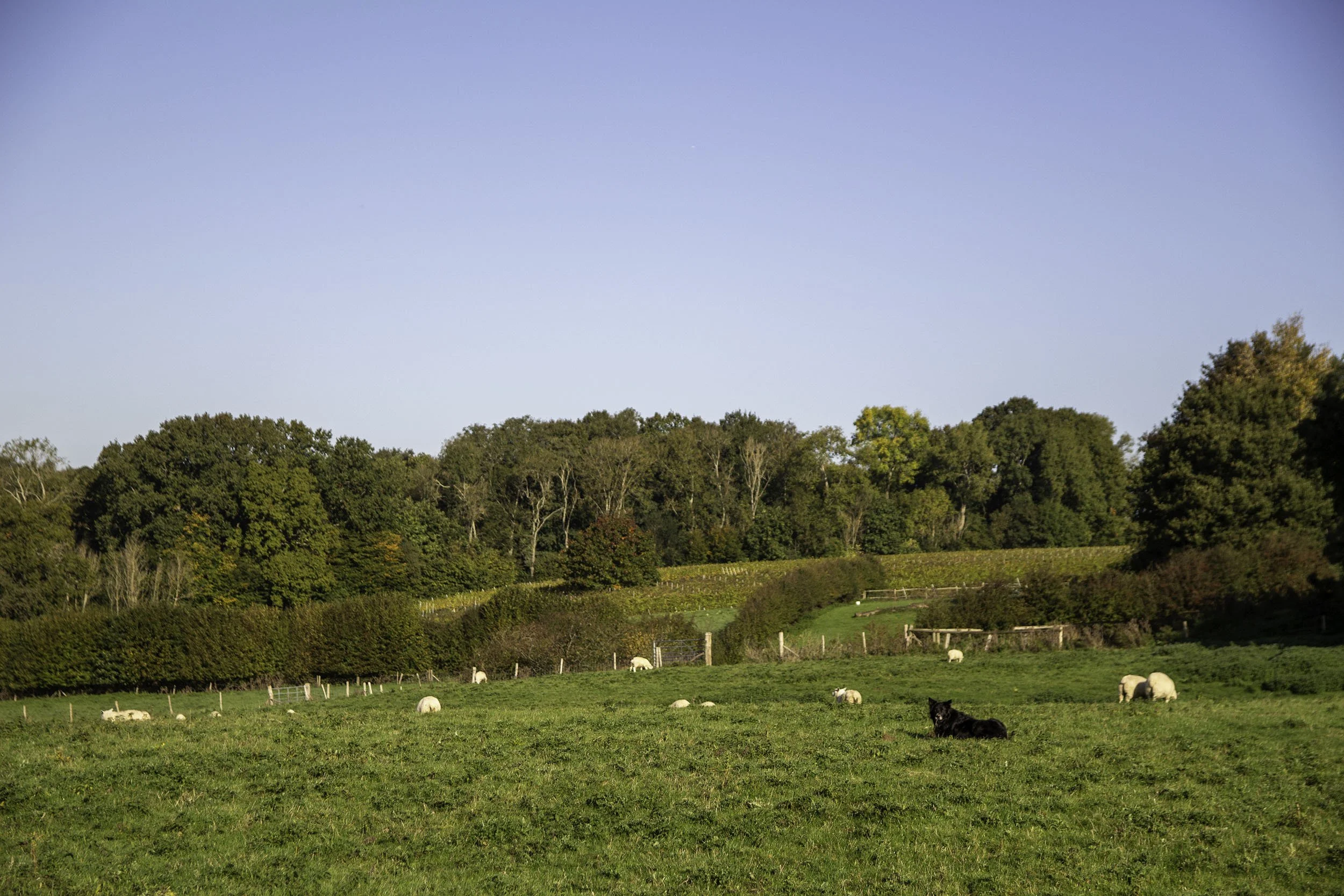
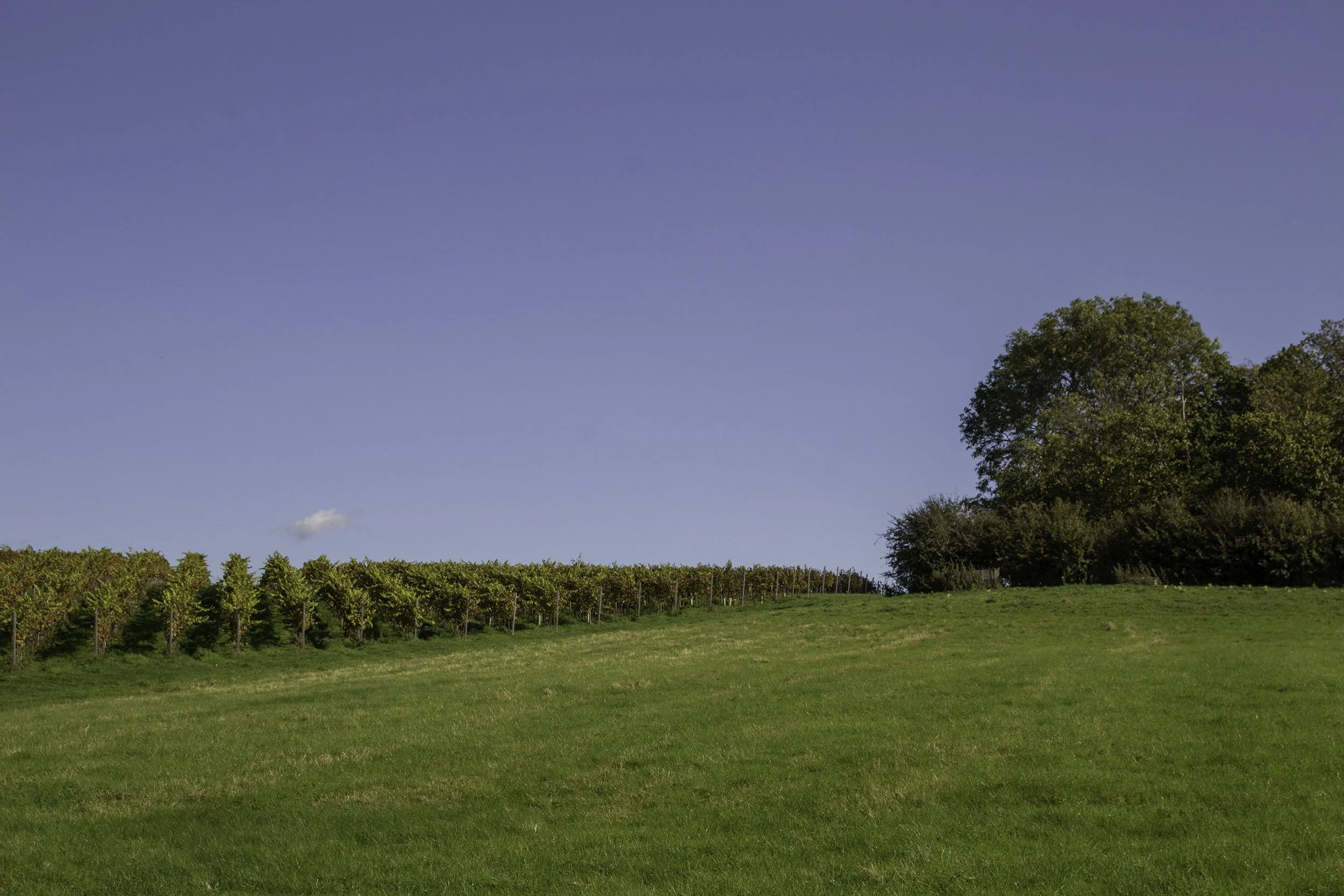
Oast Wood Vineyard sits at the northern end of the Rother Valley in the High Weald National Landscape and is surrounded by fields, ponds, streams, hedgerows, and ancient woodland. That habitat matters as it shapes the vineyard’s microclimate, supports biodiversity, and encourages healthy, living soils and balanced vine growth.
Pinot Gris
Pinot Gris began as a natural colour mutation of Pinot Noir, then became a hallmark of Alsace where it's prized for texture and spice. It's a grape that adapts well, which makes it particularly interesting in England. In a cooler growing season, Pinot Gris stays bright and precise while developing a rounded, food-friendly palate.
In the glass, it leans towards pear, citrus, and soft stone fruit, with a clean finish. Depending on the winemaking style, it can be aromatic or more structured and savoury. It also takes beautifully to skin contact, creating copper-toned wines with extra texture and a gentle grip.
Pinot Noir
Pinot Noir is the classic grape of Burgundy, celebrated because it can express small differences in place with unusual clarity. It is also central to champagne, valued for structure and red fruit character even when made as a sparkling wine.
Pinot Noir works well in England because the growing season is cooler and longer, so flavours build gradually while acidity stays naturally bright. That's a strong foundation for wines that feel detailed and well-structured rather than heavy. Wild strawberry, cherry, rose, and fine spice, with tannins that are delicate but persistent.
Pinot Noir is grown at Oast Wood for its versatility. It can make a dry rose with perfume and bite, light still reds with fine structure and quiet complexity, and bright engaging sparkling wines. In every style, the goal is the same: clarity, freshness, and a sense of place.
Bacchus
Bacchus was bred in Germany in 1933, created from a Silvaner-Riesling cross and Muller-Thurgau to produce aromatic wines that ripen reliably in cooler conditions. That explains why it has become one of England's signature grapes. It doesn't need to be expressive - it needs time, careful growing, and a light touch.
Bacchus often shows citrus, green apple, with a fresh, herbal lift, sometimes leaning towards basil as it opens. The best examples keep a clean, dry line, with bright acidity and a finish that feels crisp rather than sharp. At Oast Wood, we aim for that balance - ripe enough to give stone fruit character and aromatics but led by Riesling freshness.
Divico
Divico is a modern red variety developed in Switzerland and first planted commercially in England in 2019. It's a cross of Gamaret and Bronner, bred for strong resistance to common fungal pressures. In a long, cool, and often damp growing season, that resilience can make a real difference to fruit quality.
Divico is known for producing deeply coloured medium-bodied red wines with structure, bright tannins, and dark fruited, spicy character. It can be bold without losing freshness, which is exactly what English reds need. Think black cherry, forest fruit, spice, and a savoury edge that sits well with food.
Our Practices
Sustainability
A focus on regenerative practices that foster soil health, including winter grazing by a flock of sheep, working with heavy horses for vineyard management, and no use of herbicides.
Soil Composition
The vines are planted on sandstone, ironstone, clay, and loam. This combination contributes to the wine's complex profile, offering a roundness and mineral intensity characteristic of the vineyard.
Biodiversity
The vineyard is surrounded by wildflower meadows, wetlands, and ancient woodland, contributing to the distinct flavours of the wines.
Ecosystem
The vineyard has been designed to integrate with the ancient woodland creating a mycorrhizal network where trees and vines connect and share resources through the soil. The wood also acts as a trap for cold air that helps manage frost risk.
